What is the Dojo's Lineage?
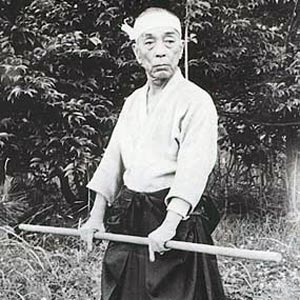
Toshitsugu Takamatsu (高松 寿嗣)
AKA "The Mongolian Tiger"
-33rd Soke, 1888-1972
Toshitsugu Takamatsu was born March 1st, 1888. He is regarded to be the last combat ninja in history. He learned Togakure-ryū Ninpō Taijutsu (戸隠流忍法体術), Gyokko-ryū Kosshijutsu (玉虎流骨指術), Shinden Fudō-ryū Dakentaijutsu (神伝不動流打拳体術), Kotō-ryū Koppōjutsu (虎倒流骨法術), Gyokushin-ryū Ninpō (玉心流忍法) and Kumogakure-ryū Ninpō (雲隠流忍法) from his grandfather Toda Shinryuken. From Ishitani sensei he mastered KukiShinden-ryū Happō Bikenjutsu (九鬼神伝流八法秘剣術), Hontai Takagi Yōshin-ryū Jūtaijutsu (高木揚心流柔体術), and Gikan-ryū Koppōjutsu (義鑑流骨法術). From Mizuta Tadafuza he mastered Takagi Yōshin-ryū Jūtaijutsu. He lived in China for about 10 years, where he had many students. Takamatsu was a very well known master of Bojutsu and Jujutsu, not many knew that he was also a grandmaster of Ninjutsu. He passed away in May 1972, at 84 years old.
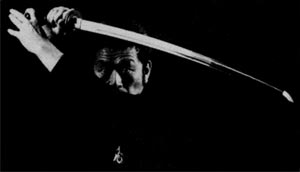
Dr. Masaaki Hatsumi (初見良昭)
-34th Soke, 1931-present
Dr. Hatsumi is the Soke (grand master) of 9 ryuha (traditional martial arts schools) which were fully transmitted to him by Soke Takamatsu Toshitsugu. Hatsumi Soke offers his teachings via the Bujinkan Dojo, an organization that he founded in honor of Takamatsu Toshitsugu, his aformentioned teacher.
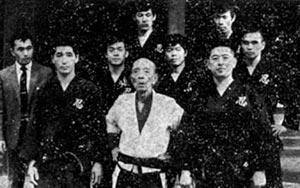
Shihan Tetsuji Ishizuka (石塚哲二)
Shihan of Soke Masaaki Hatsumi
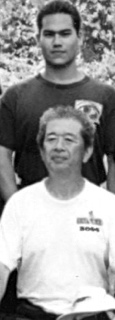
Shown in front row, left of 33rd Soke Toshitsugu Takamatsu(in white). Shihan Tetsuji Ishizuka has been training with Hatsumi Soke since the 1960's. He is one of the original students who met Hatsumi soke's teacher, Toshitsugu Takamatsu Sensei.
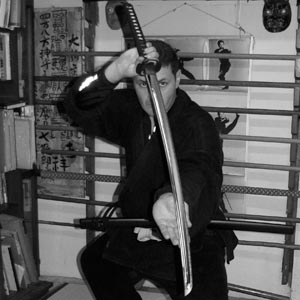
Dr. Kacem Zoughari
Student of Soke Hatsumi Masaaki & Shihan Tetsuji Ishizuka
Dr. Kacem Zoughari is a master of Ninjutsu and is a well known scholar of the history of Japanese Martial Arts. Born in Paris, France, he began studying Martial Arts in 1989 and soon began visiting Japan to further his studies. Dr. Zoughari received his Masters degree in Japanese History from INALCO. His Masters Thesis was titled: Ninjutsu: Its Form, History, and Essence. On September 8th 2008, Dr. Zoughari received his Ph.D. in Japanese History and Culture with highest honors from INALCO in Paris, France. His thesis was titled: "Tradition du Movement dans les écoles de combat classiques du Japon à partir des documents les plus anciens." (The tradition of movement in the classical combat schools of Japan based on the most ancient documents.)
Kacem continues to travel the world giving lectures and seminars. He is currently living in Japan working as a university professor and researcher. His work in Japan is centered around the continued study of ancient, pre-Edo period ryuha (martial art traditions).
Shidôshi Joshua Noro Polier (士道師ジョシュア 野呂 ポリア)
Deshi (弟子) of Dr. Kacem Zoughari.
Joshua Noro Polier is the main instructor at BHD. A native New Yorker, he has been an active student in the martial arts since he began training in Kodokan Judo at the age of four. He has been training in the Bujinkan since 1991.
Joshua's experience of studying all over the world, under many instructors, has influenced and complimented his understanding of the Bujinkan art. His quest for the best instruction available has brought him all over North America, Europe and Asia.
Joshua's first trip to Japan for Ninjutsu instruction was in 1992 for several months. He now travels to Japan for training about twice a year. Joshua received his Shidôshi Menkyo (teaching license) from Hatsumi Soke in 2000. In January of 2006, after 15 years of searching, he finally found who he was looking for, his Shishō(師匠), Dr. Kacem Zoughari.
What are the nine traditions?
Incorporated within the Bujinkan system are nine ancient martial ryus, or traditions which have been passed down from generation to generation for as long as 1000 years. Under Soke Masaaki Hatsumi, these nine schools are taught as a collective and is called "Bujinkan Budo Taijutsu." Although three of these ryus are considered ninjutsu styles, the other six are traditional koryu (ancient martial ways) or samurai schools. Dr. Masaaki Hatsumi, the current Soke (grandmaster), inherited the authority and title as head of these nine ancient martial schools from his late teacher Toshitsugu Takamatsu. For those that are unfamiliar with the various schools in our organization, here is a brief description of the nine ryu ha (traditions).
- Togakure-ryū Ninpō Taijutsu (戸隠流忍法体術) - Hidden Door School
The second oldest of the nine traditions, this ryu forms much of the basis for the ninjutsu techniques taught in the Bujinkan. This system is famous for its use of such weapons as shuko and shuriken. It was reportedly founded by Daisuke Togakure in the late 1100s. - Gyokko-ryū Kosshijutsu (玉虎流骨指術) - Jeweled Tiger School
The oldest of the nine traditions, this style is heavily influenced by Chinese kenpo and is known for its koshijutsu attacks to muscles and soft organs, also using fingers and thumbs for ripping and tearing. Gyokko Ryu was originally founded by Cho Gyokko who was said to have fled China during the Tang Dynasty around 900 AD. This ryu forms much of the basis for the Bujinkan system including the kihon happo. - KukiShinden-ryū Happō Bikenjutsu (九鬼神伝流八法秘剣術) - Nine Demons School
This ryu is a battlefield style whose specialty is the use of many different weapons including spears, swords, hanbos, etc. Many of the weapon techniques (hanbo, bo, yari, naginata, etc.) in Bujinkan come from this school. Kukishinden Ryu was reportedly founded by Izuma Kanja Yoshiteru in the mid 1100's. - Shinden Fudō-ryū Dakentaijutsu (神伝不動流打拳体術) - Immovable Heart School
This system specializes in dakentaijutsu (striking techniques), and jutaijutsu (hard grappling techniques). This was the first ryu that Takamatsu learned form his grandfather. This ryu was also founded by Izuma Kanja Yoshiteru in the mid 1100's, who also learned Chinese kenpo. - Gyokushin-ryū Ninpō (玉心流忍法) - Jeweled Heart School
The second ninjutsu ryu in the Bujinkan system was founded by Sasaki Goemon Teruyoshi in the mid 1500's. Not much is known of this ryu except that it is an Iga ninja school and concentrated more on the espionage side of ninjutsu, rather than the fighting side. It is also known for its use of sutemi (sacrifice) throws. - Kotō-ryū Koppōjutsu (虎倒流骨法術) - Tiger Knocking Down School
This style specializes in koppojutsu or bone-breaking techniques and is very linear in motion. This style was originally organized into a ryu by Sakagami Kunishige in the mid 1500s. The name of the school means to knock the tiger down with the tips of the fingers and historically, training started with striking sand and gravel, then larger stones for conditioning. - Takagi Yōshin-ryū Jūtaijutsu (高木揚心流柔体術) - High Tree, Raised Heart School
This system specializes in grappling and throwing techniques similar to aikido and judo. However, unlike judo and aikido, this style makes it difficult for the opponent to use ukemi to fall or roll safely. This ryu is known as the "bodyguard school", and was founded by Takagi Oriuemon Shigenobu around 1650. - Gikan-ryū Koppōjutsu (義鑑流骨法術) - Truth Loyalty and Justice School
This ryu was originally founded by Uryu Hangan Gikanbo in the mid 1500s and specializes in koppojutsu or bone-breaking techniques. This style is known for its low stances, with much of the footwork within the Bujinkan system coming from this ryu. - Kumogakure-ryū Ninpō (雲隠流忍法) - Hiding in the Clouds School
The third of the ninja ryus, it uses similar taijutsu as Togakure Ryu, and is also known for double blocks and strikes This ryu originated with Einaizaemon Ienaga Iga in the mid 1500's.
Are there competitions or tournaments in Bujinkan Budo Taijutsu?
No, the following quotes illustrate some of the motivation behind the exclusion of competition and tournaments in the Bujinkan:
"There was a gathering of high-ranking karateka (karate practitioners) yesterday, and they were doing breaking demonstrations. Everyone was so impressed with the karateka stacking up to 20 to 30 roofing tiles then smashing the tiles with one blow. And so I thanked them. I told them that ninja would pick up the shards of the broken tile and throw them in their face, then kill them. I said that if they could not read that far, then they were not true martial artists and would truly die in a real fight. The room fell deathly quiet after that."
-Masaaki Hatsumi
"If this were a martial sport, everything I am teaching you would be against the rules. It has to be if you are to survive a real fight." - Masaaki Hatsumi
Moreover, competition and tournaments are activities for feeding the ego. In Eastern philosophy, ego is the root of spiritual suffering. Thus, from an Eastern philosophical perspective, performing these ego-building activities is counter-productive to spiritual well being.
Is Bujinkan Budo Taijutsu a spiritual martial art?
Yes:
"There was a famous Zen master whom people would seek out to become enlightened. He was strict and would occupy people with things having nothing to do with seeking enlightenment. You see, that is the only way to achieve enlightenment; by not focusing on achieving it. Then, one day it will just come to you." -Masaaki Hatsumi
"In the martial arts, as in the majority of the world's religions, the heart is very often compared to a mirror. All impurities must be removed from the mirror to reflect the mysteries. The effect of the gradual corruption of certain actions and attitudes on the heart resembles the slow accumulation of rust on metal. Thus, in the traditional martial arts, as in ninjutsu, asceticism is consequently compared to polishing. On this subject, Takamatsu Sensei wrote: "Each one, according to the measurement of his illumination, proportionally sees the invisible things with the polishing of the mirror of the heart. The more he polishes, the more he sees and the more visible the shape of the invisible things appear to him. This effort and this asceticism are in proportion to the inspiration of the practitioner. A man obtains only the fruit of his tribulation." "
At the Benevolent Heart Dojo, we train(polish) and train(polish) and train(polish) ... then we train(polish) some more. We do not focus on being spiritual or attaining some sort of enlightenment. By not focusing on spirituality and instead focusing on our Budo training, we can embrace the spiritual aspects of the martial arts. In this manner, students of this dojo are on the path to achieve the benevolent heart of a true budoka (martial student).
Why is the school named: "The Benevolent Heart Dojo" ("BHD")?
The benevolent heart is a fundamental concept in Bujinkan training. The name of the dojo serves as a reminder for practitioners. The following excerpt illustrates the importance of the "Benevolent Heart" for those studying Japanese Budo:
"Takamatsu Sensei once wrote an article for Tokyo Sports. In it, he spoke about the importance of having a benevolent heart. It is only by nurturing this benevolent heart that you are able to truly get good at Budo. Those who do not nurture this heart bear instead a covetous heart --- a heart with a darker side. You must train so as to rid yourself of everything that is covetous and dark. You must strip away all of your bad habits so that only true benevolence remains. It is only through proper training that you can attain this benevolent heart, so please train well." -Masaaki Hatsumi
Are there separate classes held for beginners?
We do not have separate beginner classes. However ALL of the classes with the assistant instructors are recommended for beginners. At the assistant instructors classes you may find students of all levels. The lack of student separation is in effect an advantage for the beginner. Integration allows the beginning student to learn more, by having advanced students available as role models and as valuable experienced training partners. Instead of one teacher instructing a room full of new beginners, by having an integrated class of students of varied skill levels, a new student benefits from not one teacher but a room full of teachers. Furthermore, students in the Benevolent Heart Dojo are treated as individuals. Students receive individual attention unavailable at "Mc. Dojo's" (large commercial martial art schools & franchises).
The main instructors classes are recommended for intermediate and advanced practitioners. However, beginners may participate in all of the main instructor's classes, except for those held at the "Private Dojo" location. There is one class, the BH Dojo "Getsuji Ninjutsu Kyoshitsu", which is unique. At this class you will find all of the dojo instructors and members, of all levels of experience, "under one roof." practicing together.
What is the Getsuji Ninjutsu Kyoshitsu (GNK)(月次忍術教室)?
The Getsuji Ninjutsu Kyoshitsu is a mandatory class for ALL dojo members held once every month. The purpose of the gathering is to:
- Help the instructors follow the progress of all of the members of the Dojo.
- Help in maintenance of the dojo "esprit de corps". To further this end we will have an optional dinner/hang-out time after the gathering.
Will training at the Benevolent Heart Dojo make me fit?
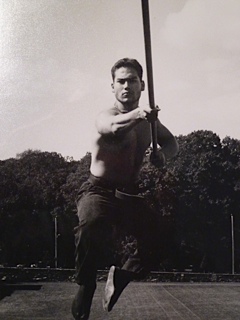
YES: Regular classes are a good starting point for new students who are not especially functionally flexible and strong. Once an important foundation in strength and flexibility is attained, from attending regular classes and self practice at home, then the next level of fitness begins...
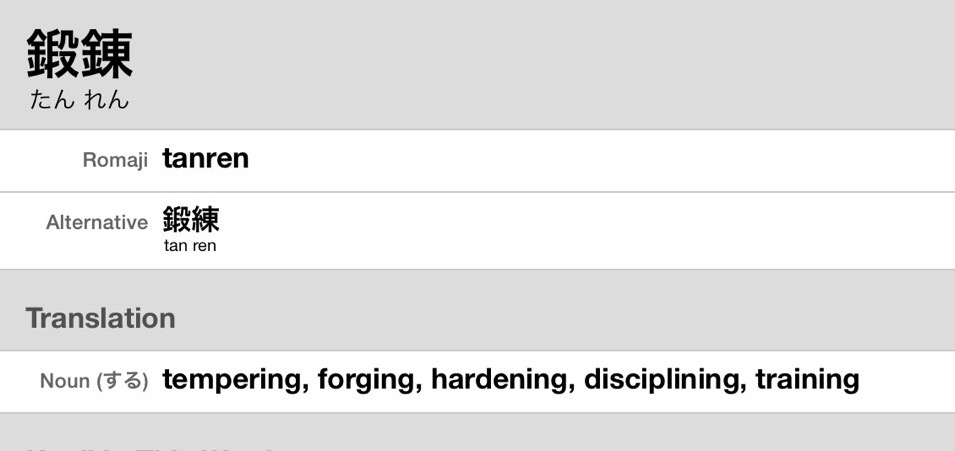
TANREN: We have specific classes for conditioning. Attention to detail for these highly challenging classes is critical and to this end "Tanren" class size is limited to 4 students maximum. These conditioning classes are labeled "Tanren" on the dojo schedule. When a student reinforces their practice with "Tanren" they are on the path to attaining the functional flexibility and fitness necessary to becoming a master in Ninjutsu.
How do I begin my experience at the Benevolent Heart Dojo (BHD)?

Read through the site thoroughly. You will find your answers both written in "black and white" but also found between the lines. Below are some key "black and white" points (key points may be repeated throughout this website for thoroughness):
- Be aware that sincere practice, diligent learning, as well as quality instruction require both sacrifice and a significant investment in funds, time and energy.
- Please keep in mind, the BHD instructors encourage and focus their attentions on those who have demonstrated their long-term commitment to the BHD and to their individual practice. BHD instructors also generously give NEW participants who are enthusiastic, intelligent, benevolent, and are positive contributors to the group a lot of individual attention and encouragement.
- The practice at the BHD is highly challenging and is NOT for everyone. If your tendency is to embrace challenging but rewarding endeavors then the next step is to fill out an application for participation. However...
- To be frank, there are many other martial arts programs, dojos and groups which provide training to anyone who can pay. If the above points don't strike a deep resonance with you then it's best that you continue your search within the multitudes of other options out there.
- Once you have filled out an application please be patient. We are not a commercial dojo and we look over applications about once a month, although sometimes we do so more or less frequently. Over the 20+ years of reviewing applicants and teaching candidate participants for the BHD, those who were impatient during the interview process never endured. This wait for a response itself is a simple and effective way of filtering out those who have little patience; as my Shishō, 師匠, has said: "On the battlefield, the only thing important is to be the last man standing."
- After you have filled out an application for participation and we have reviewed it, we will contact you to schedule your free visitors class where you can observe and participate in a class in progress. (We do NOT welcome walk-ins.) One of the questions on the application is in regards to the schedule and which classes you would hope to attend. Please provide accurate information as we will use this information to help coordinate the free trial class. However, there is no guarantee that the information you provide is when we will be able to hold the free trial class. If repeated attempts to schedule a free trial class fail then this is a possible indicator of a lack of sincerity, a lack of available time for this new endeavor or a lack of essential time management skills.
- When you attend your free visitors class, please bring appropriate clothing for an active outdoor class or an active indoor class, depending on which you are scheduled for.
- You will be required to fill out a waiver or waivers and a hard copy application for participation. Enjoy your class and ask any further questions you may have. You will be given a copy of the new participant dojo payment options to keep.
- Decide if the BHD is the vehicle that you wish to begin your journey on and let us know.
- If you have gotten this far and are almost an official participant of the BHD, we will then add you to our class schedule and Google Calendar invitation list. Please RSVP for all classes that you will attend. Class invitations will often go out several days before each class. Please bring in the appropriate payment for the plan you choose on the first class you attend. In the future, please bring any payments to one of the GNK classes.
- At this point you are now a participant of the BHD. After 6 months to about one year of steady practice and attendance you may be ready for your first rank test.
- If you are invited to take the test and you pass you will become a member of the BHD. These are the “black and white” steps of the beginning of your experience at the Benevolent Heart Dojo.
What is your grading policy? When does one become a “member” of the BHD and what are the changes and benefits of becoming a member?

Grading is a tool for measuring a student’s progression and to help the student monitor their own progress and goals. There is usually one testing period a year. Students are not required to test however it is highly recommended that they do so. New participants, with no rank, wear a white belt and have no official rank in the Bujinkan organization. Upon conferment of an official Bujinkan rank, usually a "kyu" rank, a participant becomes an official member of the Benevolent Heart Dojo.
After the bestowal of rank, the new BHD member will no longer choose their own participantion plan but will have responsibilities to maintain active membership in good standing. Please inquire in person about these responsibilities.
Active BHD Members in good-standing will have earned the following privileges:
- Admittance to classes held at the private dojo in NoHo.
- Reduced rates on Healing Arts. Please inquire in person about the discount.
- Reduced rates on private lessons ie:Healing Arts - Non-Massage and special conditioning sessions, and occasional free training sessions. Please inquire in person about the details.
- The opportunity to visit, stay and practice at Ishizuka Sensei's Dojo in Japan, as a representative of the BHD.
- Complimentary access to the Getsuji Ninjutsu Kyoshitsu(月次忍術教室).
- Complimentary invitation to the Nenkai Ninjutsu Gashuku(年会忍術合宿).
What is the Nenkai Ninjutsu Gashuku(年会忍術合宿)?

The Nenkai Ninjutsu Gashuku is an annual training camp held in the the Adirondack Region of Northern NY. The event lasts for 1-2 weeks. The NN Gashuku is a gift for active BHD Members in good standing. Participation is optional. Practice topics may include:
- Junantaiso & Tanren
- Taijutsu & Weapons- Kenjutsu, Bojutsu, Yarijutsu, Shurikenjutsu, Jojutsu, Hanbojutsu, Teppoujutsu ETC.
Additionally there is the opportunity for hiking, swimming, canoeing and other outdoor activities.
Guidelines For Participation In The Bujinkan
The Bujinkan shall be open to only those who agree with and uphold the guidelines of the Bujinkan Dojo. Those not doing so shall not be allowed to join. Specifically:
- Only those who have read and agreed with these guidelines shall be allowed to participate.
- Only those able to exercise true patience, self-control, and dedication shall be allowed to participate.
- A physician's examination report shall be required. Specifically, individuals with mental illness, drug addiction, or mental instability shall be barred from joining. The necessity of such a report concerns individuals who may present a danger to others, for example, those with infectious diseases or illnesses, individuals with clinically abnormal personalities or physiology, and individuals lacking self-control.
- Individuals with criminal records shall be turned away. Troublemakers, those who commit crimes, and those living in Japan who break domestic laws shall be turned away.
- Those not upholding the guidelines of the Bujinkan, either as practitioners or as members of society, by committing disgraceful or reproachable acts shall be expelled. Until now, the Bujinkan was open to large numbers of people who came to Japan. Among them, unfortunately, were those committing violent drunken acts, the mentally ill, and trouble makers who thought only of themselves and failed to see how their actions might adversely affect others. Through their actions, such people were discarding the traditional righteous heart of the Bujinkan. From this day forward, all such people shall be expelled.
- Regarding accidents occurring during training (both inside and outside the dojo), one should not cause trouble to the Bujinkan. This is an extremely important point. Those unwilling to take personal responsibility for accidents occurring during Bujinkan training shall not be admitted. Reiterating for clarity, the Bujinkan shall not take responsibility for any accidents happening in the course of training, regardless of the location.
- All those joining the Bujinkan must get an annual member's card. This card not only preserves the honor of the Bujinkan members, it indicates you are part of a larger whole - one whose members come together with warrior hearts to better themselves through training and friendship. It evinces the glory of warrior virtue, and embodies both loyalty and brotherly love.
The tradition of the Bujinkan recognizes nature and the universality of all human life, and is aware of that which flows naturally between the two parts:
"The secret principle of Taijutsu is to know the foundations of peace. To study is the path to the immovable heart (fudoshin)."
The Code of the Dojo:
- To know that patience comes first.
- To know that the path of Man comes from justice.
- To renounce avarice, indolence, and obstinacy.
- To recognize sadness and worry as natural, and to seek the immovable heart.
- To not stray from the path of loyalty and brotherly love, and to delve always deeper into the heart of Budo.
To follow this code is part of the dojo's guidelines.
Meiji 23 (1890) Spring, Toda Shinryuken Masamitsu Showa 33 (1958) March, Takamatsu Toshitsugu Uou Hatsumi Masaaki Byakuryu
- Kyu levels: beginners
- First to Fifth dan: Ten (heaven)
- Fifth to Tenth dan: Chi (earth)
- Tenth to Fifteenth dan: Jin (person)
- The eleventh to fifteenth dan are broken into Chi (earth), Sui (water), Ka (fire), Fu (wind) and Ku (emptiness); the Happo Biken will be taught at these levels. The fifth dan test shall only be administered by Soke. True Shihan can be given fifteenth dan.
Recently, the Bujinkan has become truly international. Just as there are various time zones, so exist various taboos among the world's peoples and nations. We must respect each other, striving to avoid such taboos. We must put the heart of the warrior first, working together for self-improvement and for the betterment of the Bujinkan.
Those not upholding the above-mentioned guidelines shall be forced out of the Bujinkan.
The Bujinkan Dojo
Soke: Masaaki Hatsumi — Title: Hisamune
636 Noda, Noda-shi, Chiba-ken 278 Japan
Tel: 0471-22-2020 Fax: 0471-23-6227
All members should own every [in print / attainable] copy of the Hombu's publications, and read and re-read them consistently as part of your training. Reading them soon after you join, a year later, and then several years after that, will afford you with different interpretations and different feelings. The Hombu's publications also contain information concerning the worldwide practice of Bujinkan Budo Taijutsu and the various materials (printed, video, or otherwise) available for training. Translation by Benjamin Cole
Adobe PDF file (12k) of the Guidelines For Participation In The Bujinkan
 (Japanese Langauge File - NIHONGO)
What does it cost to train at the Benevolent Heart Dojo and what do I do if I would like to participate or observe a class?
Bujinkan Dojos in Japan do not put their tuition/membership fees on-line. This isn't supposed to be a commercialized art and may be considered poor taste to list rates online. However, if you fill out the contact form or an application for participation we will contact you with more pricing information and/or arrange for you to view a class. Please be patient for a response.
Joining the Benevolent Heart Dojo
The Bujinkan NYC Benevolent Heart Dojo is looking for students who:
- are mature.
- welcome challenges.
- are willing to make sacrifices for their own progress and the betterment of those around them.
- are self-motivated.
- will not settle for mediocrity.
- can dedicate a significant amount of time to their martial arts training.
- are open minded and able to "empty their cup".
- are respectful and courteous.
- upon being ranked, are able regularly able to attend the monthly BHD Getsuji Ninjutsu Kyoshitsu.
- (over the age of 17 although exceptions have been made for highly mature youths with guardian approval).
- (and most importantly) have a good heart.
If this sounds like you, then you may be a good candidate to become a participant at the Benevolent Heart Dojo.
Please keep in mind, our dojo is a small tight-knit group, much like a family and, following in our teachers' footsteps, we only accept sincere and trust-worthy individuals.
If you think you will make a good participant at the Benevolent Heart Dojo please fill out our Application for Participation and we will get back to you as soon as possible.
Do you offer Private Lessons?
Private lessons are available by request. All privates are taught by our main instructor, Shidôshi Joshua Noro Polier. Basic rates can be found in the "Healing Arts - Non-Massage" section of the website.
For learning a third person can be very helpful in order to observe the techniques from a third person perspective. If students are interested, private lessons can be coordinated so that two or more students are able to take lessons together.
Disclaimers
* Please check with your physician if you are unsure of your athletic abilities, are overweight, or if you have heart or other health problems. By nature, as with all martial arts, Bujinkan Budo Taijutsu is dangerous. Although every effort is made to prevent injuries, Bujinkan NYC Benevolent Heart Dojo is not responsible for injuries or accidents that occur during training.